
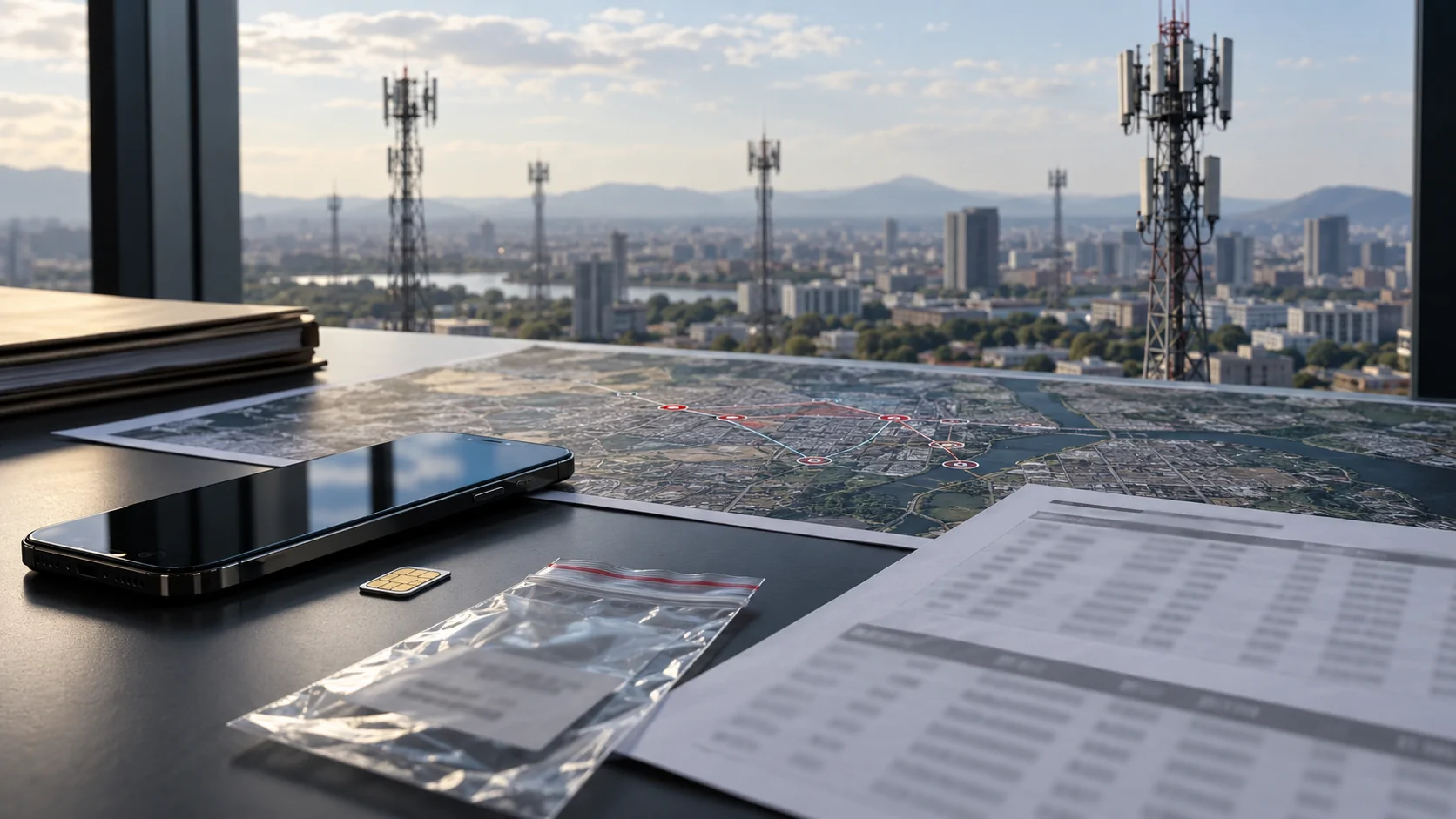

Communication records can reveal important connections, timelines and patterns during a digital investigation. When investigators need to understand who communicated with whom, when communication occurred and how activity relates to a particular period or location, CDR analysis can provide valuable investigative context.
Call Detail Records, commonly known as CDRs, are structured records generated by telecommunications systems. Depending on the provider and dataset, they may contain information such as telephone numbers, timestamps, call duration, communication type, device identifiers and network or cell-site information.
CDR analysis is therefore more than sorting phone numbers in a spreadsheet. Investigators need to understand the structure and limitations of the data, identify relevant relationships and correlate telecommunications records with other evidence.
What Is CDR Analysis?
CDR analysis is the systematic examination of Call Detail Records to identify communication patterns, relationships, timelines and relevant network information.
A CDR normally records a communication event rather than the content of that communication. Depending on the dataset, a record may include the originating number, receiving number, date and time, duration, communication type, device identifiers and cell-site information.
The exact fields vary between telecommunications providers and datasets. Understanding those fields before analysis is therefore an important part of the investigative process.
What Information Does a Call Detail Record Contain?
Depending on the source, a CDR dataset may contain:
- Calling and called telephone numbers
- Date and time of communication
- Call duration
- Call direction
- Communication or service type
- IMEI or other device identifiers, where available
- IMSI or subscriber identifiers, where available
- Cell ID or serving cell information
- Location Area Code or equivalent network information
- Other operator-specific network fields
Not every CDR contains every field. Formats and field names can also differ, which means investigators must correctly interpret the source data before drawing conclusions.
Why Is CDR Analysis Important in Digital Forensics?
A single call record may provide very little context. When large numbers of records are analysed together, however, investigators can identify relationships and patterns that are difficult to see in individual records.
CDR analysis can help investigators examine:
- Repeated communication between individuals
- Changes in communication frequency
- Communication before or after significant events
- Relationships between multiple phone numbers
- Device and subscriber associations
- Communication activity within specific time periods
- Network or cell-site activity
The purpose is not to treat an individual communication as proof of a specific action. Instead, investigators analyse patterns and correlate them with other evidence to determine what the records can reliably establish.
How Investigators Use CDR Analysis
Communication Pattern Analysis
Investigators can examine how frequently two numbers communicate, whether communication is reciprocal and whether activity changes around a particular date or event.
Repeated contact or a significant change in communication behaviour may identify relationships that require further investigation.
Timeline Reconstruction
CDRs can help establish communication activity around a specific event. Investigators can examine records before, during and after a relevant time period and compare them with other evidence.
Time handling is particularly important. Incorrect assumptions about time zones, timestamp formats or data conversion can affect the resulting chronology.
Relationship and Link Analysis
Large datasets may contain relationships between numerous numbers and devices. Link analysis can help investigators identify frequently communicating numbers, common contacts, clusters and potential intermediaries without manually reviewing every record.
This becomes particularly useful when an investigation involves multiple subjects or interconnected communication networks.
Cell Tower and Location Analysis
Some CDR datasets contain information about the cell site or sector that handled a communication. This can provide geographic context for communication activity.
However, cell-site information should not automatically be treated as precise GPS data. Network coverage, sector configuration and other technical factors affect how this information should be interpreted.
CDR and tower dump analysis is therefore best treated as an evidence-correlation exercise rather than a simple method of establishing the exact location of a device.
Device and Subscriber Correlation
Where identifiers such as IMEI or IMSI are available, investigators can examine relationships between telephone numbers, subscriber information and devices.
This may help reveal changes in SIM or device usage and identify relationships that are not immediately visible from communication records alone. Such findings should still be corroborated with other evidence.
CDR Analysis vs Tower Dump Analysis
CDR analysis and tower dump analysis are related, but they provide different investigative perspectives.
CDR data generally focuses on communication events associated with particular numbers or subscribers. A tower dump may contain records associated with devices communicating through a particular cell or group of cells during a defined period.
For example, CDR analysis may help investigators examine the communication history of a particular number, while tower-related analysis can help identify devices associated with a specific network area during a relevant period.
Both can become more useful when correlated with other digital and investigative evidence.
How CDR Analysis Software Helps Investigators
Large CDR datasets can contain thousands or millions of records. Manual sorting, filtering and comparison can become difficult as the number of subjects, devices and time periods increases.
Suitable CDR analysis software can help investigators organise and process this information more systematically.
Depending on the platform, useful capabilities may include:
- Importing structured CDR datasets
- Filtering records by number and time period
- Identifying communication relationships
- Correlating device identifiers
- Visualising communication networks
- Analysing relevant cell-site information
- Comparing multiple datasets
- Generating investigative reports
The right tool depends on the dataset, investigative requirements and operational environment. Technology can reduce manual processing, but interpretation remains the responsibility of the investigator.
CDR Analysis and Digital Evidence Correlation
The strongest investigative value often comes from combining telecommunications records with other sources of evidence.
An investigation may involve:
- CDRs showing communication activity
- Mobile device extraction data
- Financial transaction records
- GPS or other location evidence
- CCTV footage
- Social media information
- Vehicle or travel records
Each source may provide only part of the picture. When they are carefully correlated, investigators can examine whether different evidence sources support or contradict the same timeline or relationship.
This approach fits within a broader digital forensics workflow, where telecommunications evidence can be examined alongside evidence recovered from devices, storage media and other digital environments.
Important Limitations of CDR Evidence
CDR analysis can provide valuable investigative information, but its limitations must be understood.
CDRs Do Not Normally Contain Communication Content
A CDR generally records information about a communication event rather than the actual conversation or message content. Additional evidence is required when investigators need to establish what was communicated.
Cell-Site Data Is Not Automatically Precise GPS
A cell-site connection can provide geographic context, but it does not automatically prove the exact physical location of a device.
A Device Is Not Automatically a Person
The appearance of a telephone number or device in a CDR does not by itself establish who physically used it at a particular moment. Identity-related conclusions should be supported by other available evidence.
Source Data Must Be Preserved
Original records, field definitions, acquisition information and relevant processing steps should be preserved and documented. Investigators should maintain an unmodified copy of the source data so that analytical work can be reviewed later.
A Practical CDR Analysis Workflow
- Preserve the source records: Maintain the original datasets and relevant acquisition information.
- Understand the dataset: Review fields, formats, timestamps and provider-specific information.
- Prepare the data: Apply documented normalisation or formatting procedures where necessary.
- Define the investigative scope: Identify relevant numbers, devices, dates, locations and events.
- Analyse communication patterns: Examine recurring contacts, frequency changes and relationships.
- Examine location context: Review available cell-site information carefully.
- Build timelines: Compare communication activity with significant investigative events.
- Correlate other evidence: Compare CDR findings with mobile, financial, CCTV or other relevant evidence.
- Document the analysis: Record filters, transformations, assumptions and limitations.
- Report the findings: Clearly distinguish observed evidence from interpretation.
Why CDR Analysis Belongs in a Broader Investigation
Telecommunications records rarely provide the complete answer to an investigation. Their value increases when they can be examined alongside other forms of digital and investigative evidence.
For example, CDR activity can be compared with evidence recovered from a mobile device to determine whether both sources support the same timeline. Communication activity may also be examined alongside financial records or other investigative information to provide additional context.
Pelorus supports investigations across digital forensics, cybersecurity, threat intelligence and financial forensics through its investigation services.
When an investigation involves multiple evidence sources, structured case management can also help investigators maintain context and continuity. Pelorus CaseManager is designed to organise cases, evidence and intelligence within a controlled investigative workflow.
Frequently Asked Questions About CDR Analysis
What is CDR analysis?
CDR analysis is the examination of Call Detail Records to identify communication patterns, relationships, timelines and relevant network information during an investigation.
What does CDR stand for?
CDR stands for Call Detail Record. It is a structured telecommunications record containing metadata about communication events.
What can CDR analysis reveal?
Depending on the available data, CDR analysis can help identify communication relationships, activity patterns, relevant time periods, device associations and network location context.
Can CDR analysis show the exact location of a phone?
Not necessarily. Cell-site information can provide geographic context, but it should not automatically be interpreted as precise GPS location.
Does a CDR contain the content of a phone call?
No. A CDR generally contains metadata about a communication event rather than the content of the conversation.
What is CDR and tower dump analysis?
CDR and tower dump analysis involves examining telecommunications records and, where available, records associated with particular cell sites or areas. The two datasets can provide different investigative perspectives and may be correlated with other evidence.
Why use CDR analysis software?
Specialised CDR analysis software can help investigators process large datasets, identify relationships, filter records, examine timelines and visualise communication networks more efficiently than manual analysis alone.
Conclusion
CDR analysis gives investigators a structured way to examine telecommunications metadata and identify communication relationships, timelines and network context.
Its value does not come from treating an individual call record as conclusive evidence. It comes from analysing records systematically, understanding their limitations and correlating them with other relevant evidence.
As digital investigations involve increasingly large and diverse datasets, CDR analysis can help investigators move from isolated communication records towards a clearer understanding of relationships and events.
Pelorus supports digital forensic investigations by helping teams analyse and correlate evidence from multiple sources. For investigations involving telecommunications data, this broader approach can help connect CDR findings with other digital evidence within a structured, evidence-led workflow.
Need to Make Sense of Complex CDR Evidence?
When telecommunications records form part of a larger investigation, the challenge is often connecting the data without losing its context. Speak with Pelorus about your investigation requirements and how CDR evidence can fit into a broader digital forensic workflow.