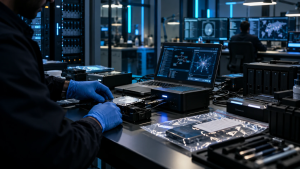
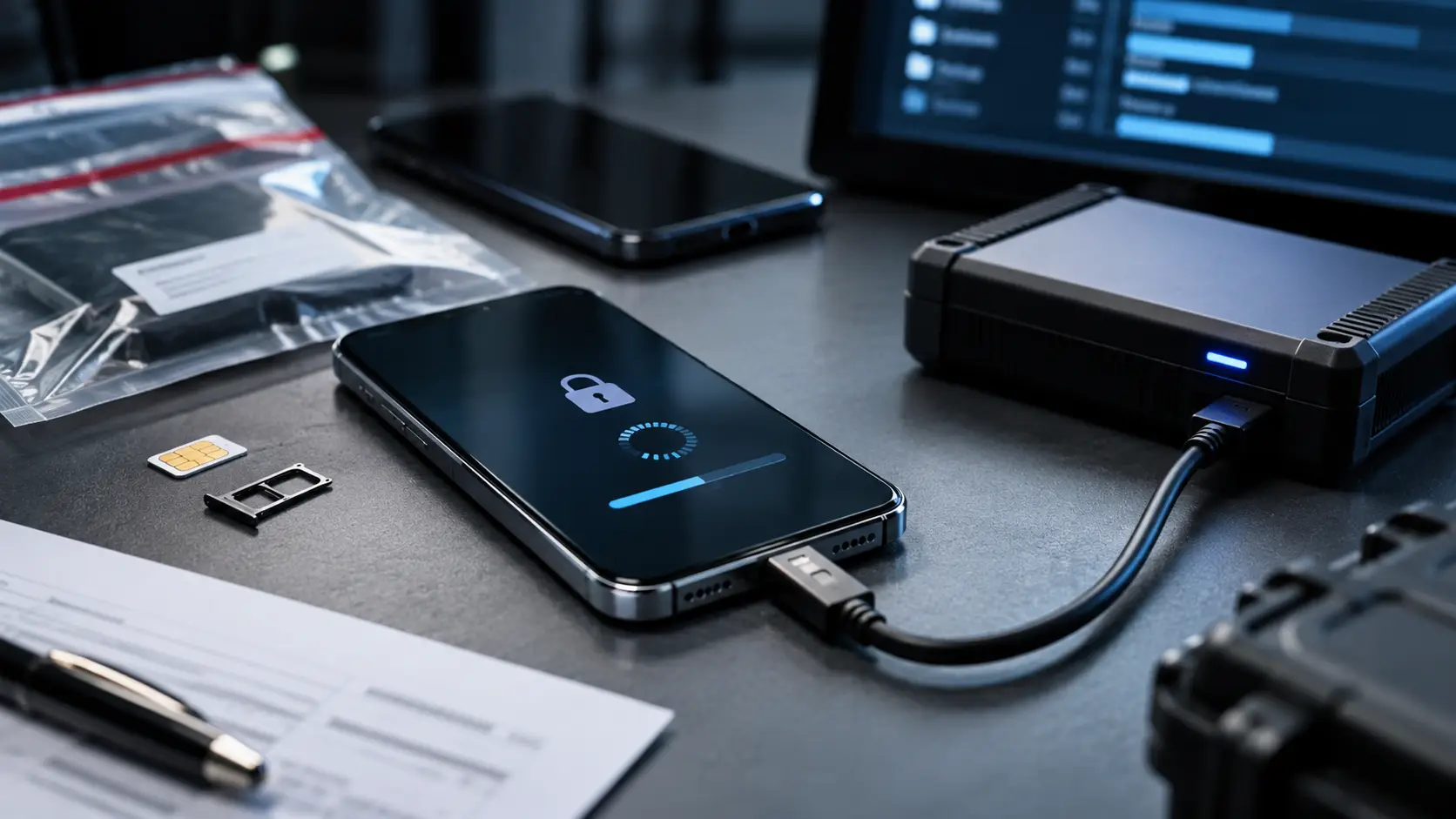

Smartphones can contain communications, photographs, videos, application data, location information, browser activity, documents, contacts and records of interactions across multiple services. But extracting this information is not simply a matter of connecting a phone to a computer and copying its files. A device may be locked, encrypted, damaged, running a specific operating-system version or using applications that store information in specialised databases.
Mobile forensics investigation is the structured process of identifying, preserving, acquiring, examining and analysing digital evidence from smartphones and other mobile devices. The objective is to recover relevant information while maintaining evidence integrity and documenting how the evidence was obtained.
What Is Mobile Forensics?
Mobile forensics is a specialised branch of digital forensics focused on recovering and analysing evidence from smartphones, tablets and other mobile devices.
According to NIST, mobile device forensics involves recovering digital evidence from mobile devices under forensically sound conditions using accepted methods. The process includes validation, preservation, acquisition, examination, analysis and reporting. NIST Guidelines on Mobile Device Forensics
The evidence available depends on the device, operating system, security configuration, applications, storage and acquisition method. There is no single extraction method that works identically across every smartphone.
What Evidence Can a Smartphone Contain?
Depending on the device and acquisition method, investigators may encounter:
- Call records and contacts
- SMS and messaging data
- Emails
- Photographs and videos
- Application data and databases
- Browser history
- Location and navigation information
- Wi-Fi and Bluetooth information
- Documents and downloaded files
- Calendar and event information
- Device and system information
- Cloud-linked information where lawfully accessible
The availability and completeness of these categories vary. Investigators should not assume that every smartphone will expose the same data.
How a Mobile Forensics Investigation Works
1. Document and Preserve the Device
The forensic process begins before extraction. Investigators should document the manufacturer, model, identifying information, physical condition, displayed time, power state, lock state and relevant connections or accessories.
Chain-of-custody records should identify the evidence and document each transfer of possession.
Preservation also needs to account for the possibility that a mobile device can communicate with networks, receive new information or change state. Depending on the circumstances, investigators may need to consider network isolation, the device’s power state, lock state and potential encryption. The appropriate approach differs between a powered-on unlocked device, a powered-off device and a damaged or inaccessible device.
2. Select the Appropriate Acquisition Method
The acquisition method should be selected according to the investigative objective and technical condition of the device. SWGDE describes mobile acquisition levels including manual, logical, file-system and physical approaches.
More extensive acquisition is not automatically necessary for every investigation.
3. Acquire and Examine the Data
Manual examination documents information visible through the device interface but does not provide a comprehensive forensic acquisition.
Logical extraction obtains files or objects through interfaces provided by the device or operating system. Depending on the device and supported method, it may provide contacts, messages, media and application-related information.
File-system acquisition provides a broader representation of the device’s file system and may expose application databases, system files, configuration information and other artefacts.
Physical acquisition traditionally refers to obtaining data from underlying storage rather than requesting information through the operating system. Historically, this could provide access to storage areas not represented through conventional logical acquisition and could support recovery of certain deleted or residual data. Modern smartphones increasingly use hardware-backed security and encryption, so the practical availability and usefulness of physical acquisition varies considerably.
What Happens When a Smartphone Is Locked?
A locked smartphone can significantly affect the available forensic options. The model, operating-system version, security configuration and current device state can determine which acquisition methods are possible.
Some supported devices may permit certain forensic acquisition methods while locked. Others may require credentials, a particular device state or a specific technical workflow.
There is no universal method for extracting every locked smartphone. Investigators should confirm device and tool support before examination rather than assuming that a particular acquisition technique will work.
Can Deleted Smartphone Data Be Recovered?
Sometimes, but recovery is never guaranteed.
Whether deleted information can be recovered depends on how it was deleted, whether relevant storage or database records have been overwritten, how the application stores information and what level of acquisition is possible.
File-system acquisition may expose database records, logs or remnants that are not available through a basic logical extraction. However, investigators should distinguish between potentially recoverable remnants and a guarantee that deleted information can be restored.
Mobile App Data and Connected Evidence
Applications can contain some of the most relevant evidence on a smartphone. Depending on the application and acquisition method, investigators may examine messages, account identifiers, application databases, media files, usage information, location-related records, timestamps, cached information and configuration records.
Application data is often stored in databases and structured files rather than simple documents. Forensic examination therefore requires appropriate parsing and interpretation of available artefacts.
A smartphone may also connect to cloud services, computers, tablets and other devices. Related information may exist outside the handset, but cloud data is not automatically available simply because an account is present on the phone. Access can involve additional technical, legal and jurisdictional requirements.
Why Evidence Integrity Matters
Recovering information is only part of a forensic investigation. Examiners must also be able to explain how the evidence was handled.
Documentation should cover collection, preservation, acquisition and examination. Chain-of-custody records should identify the evidence and document transfers of possession. Tools and equipment used for acquisition should also be appropriately tested and validated for their intended use.
These practices create a defensible record of what was acquired, how it was processed and how findings were produced.
Analysing Extracted Smartphone Evidence
Once data has been acquired, investigators can search messages, application records, media, contacts, locations, browser activity and other artefacts relevant to the case.
Timeline analysis can help compare timestamps and events across different data sources. Mobile evidence can also be correlated with computers, networks, CCTV systems, communication records and other digital evidence.
The objective is not to collect the largest possible quantity of information. It is to identify evidence that helps answer the investigative questions while preserving the context required to interpret it correctly.
Pelorus’ Digital Forensics capability covers forensic acquisition, decoding and analysis across smartphones and other digital evidence sources.
Mobile Forensics in Investigations
Mobile device evidence can support different investigative requirements.
In law enforcement investigations, smartphones may contain evidence relevant to communications, relationships, locations, online activity and events surrounding an offence.
In corporate investigations, mobile evidence may become relevant to suspected data leakage, insider activity, fraud, policy violations or other incidents involving company information.
The investigative objective should determine what evidence is sought and how the device is examined. A focused examination can be more appropriate than indiscriminately reviewing every available artefact.
Pelorus also provides digital investigation services for complex cases involving digital evidence, cyber incidents, fraud and other investigative requirements.
Common Challenges in Mobile Forensics
Device Diversity
Manufacturers, models and operating-system versions differ significantly, creating variation in forensic workflows and available acquisition methods.
Encryption and Security
Modern smartphones increasingly use encryption and hardware-backed security. Access to protected information depends on the device, security state and available acquisition method.
Rapid Technology Changes
New devices and operating-system updates can change how data is stored and what forensic methods are available. Tools and workflows therefore require continuing validation and updates.
Large Evidence Volumes
A single smartphone can contain years of communications, photographs, application records and other information. Effective filtering and analysis are essential.
Evidence Preservation
Improper handling can alter or compromise digital evidence. Preservation and documentation should therefore be established before examination begins.
Frequently Asked Questions About Mobile Forensics Investigation
What is a mobile forensics investigation?
A mobile forensics investigation is the structured process of preserving, acquiring, examining and analysing digital evidence from smartphones, tablets and other mobile devices.
What data can be extracted from a smartphone?
Depending on the device and acquisition method, investigators may recover call records, messages, contacts, photographs, videos, application data, browser activity, location information, documents and other digital artefacts.
Can deleted smartphone data be recovered?
Sometimes. Recovery depends on how the data was deleted, whether it has been overwritten, how the relevant application stores information and what acquisition method is available. Deleted data cannot be assumed to be recoverable.
Can data be extracted from a locked smartphone?
It depends on the device, operating-system version, security configuration, device state and supported forensic acquisition methods. There is no universal extraction method for every locked smartphone.
What is the difference between logical and physical extraction?
Logical extraction obtains data through interfaces exposed by the device or operating system. Physical acquisition traditionally involves accessing data from the underlying physical storage. Modern device security means the practical capabilities of each method vary significantly between devices.
Why is chain of custody important in mobile forensics?
Chain-of-custody documentation records the identity and handling of evidence from collection through subsequent transfers and examination. It helps establish continuity and supports the defensibility of the forensic process.
Conclusion
Mobile forensics investigation is a structured process for recovering and analysing digital evidence from smartphones while maintaining the integrity and context of that evidence.
The appropriate acquisition method depends on the device, operating system, security state, investigative objective and available forensic capabilities. Smartphones can contain valuable evidence across communications, applications, media, locations, documents and other digital artefacts, but successful examination requires more than extracting data.
Investigators must preserve the device appropriately, document their actions, select a suitable acquisition method, analyse recovered information carefully and report findings with their limitations.
Pelorus supports mobile forensic investigations through specialised technologies and expertise that help investigators acquire, analyse and interpret digital evidence from smartphones and related devices. These capabilities can support evidence-led investigations where mobile data needs to be examined alongside other digital evidence within a structured and defensible forensic workflow.
Need to Examine a Smartphone as Evidence?
Whether the device is accessible, locked, damaged or contains large volumes of application data, the right forensic approach depends on the device and the investigative objective.