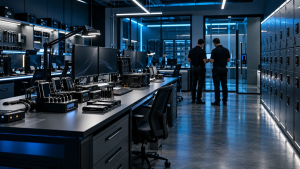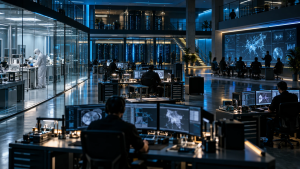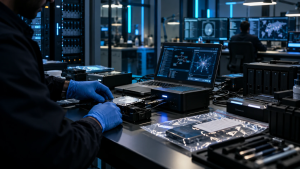
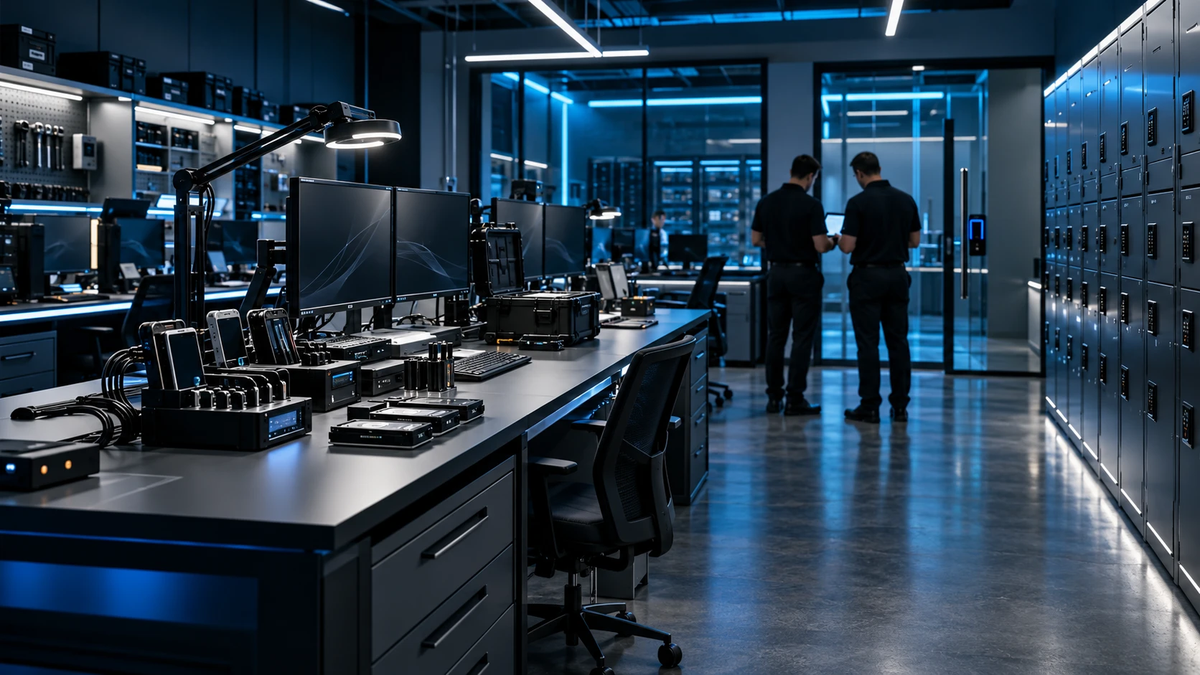

Building a digital forensics lab from scratch involves far more moving parts than most agencies initially expect: civil infrastructure, network security, forensic hardware, software licensing, staff training and long-term maintenance, all of which need to come together as one functioning system. This is why many police departments, government bodies and enterprises now look for turnkey digital forensics lab providers in India rather than managing each of these components separately through multiple vendors.
A turnkey approach means one partner takes end-to-end responsibility for design, procurement, installation and handover, so the agency receives a fully operational facility rather than a collection of disconnected purchases. But not every provider that calls itself “turnkey” actually delivers on that promise, which makes vendor selection one of the most important decisions in the entire project.
Key Takeaways
- A true turnkey forensic lab covers infrastructure, technology, training and support under a single accountable partner, not just equipment supply.
- Agencies should evaluate forensic lab infrastructure requirements against their actual case volume and case types before finalising a design.
- Forensic lab solutions in India vary widely in quality, so past deployment experience with government or law enforcement bodies is a strong indicator of reliability.
- Long-term maintenance, upgrade paths and training support matter as much as the initial lab build.
- Choosing the wrong provider can result in underused equipment, workflow gaps and labs that fail to meet evidentiary standards over time.
What “Turnkey” Actually Means in a Forensic Lab Context
A genuinely turnkey forensic lab project should take an agency from an empty room, or an outdated existing space, to a fully functioning facility without requiring the agency to coordinate multiple vendors for infrastructure, hardware, software and training separately. This includes civil and electrical work where needed, network design, procurement of forensic tools appropriate to the agency’s case load, installation and configuration, staff training, and defined workflows for evidence handling.
If a provider’s “turnkey” offering stops at equipment delivery, the agency is still left to manage integration, training and workflow design on its own, which defeats much of the purpose of choosing a turnkey model in the first place.
What Agencies Should Evaluate Before Choosing a Provider
1. Scope of Infrastructure Ownership
Confirm exactly what falls under the provider’s responsibility. Does the scope include civil work such as cleanroom construction and secure storage areas, or only the technology layer? Ambiguity here often leads to cost overruns and delays later in the project.
2. Technology Fit for Actual Case Types
A lab built for high-volume mobile device cases needs a different technology mix than one focused on server and network forensics. Providers should design forensic lab infrastructure around the agency’s real case history and anticipated future needs, not a generic template.
3. Compliance and Legal Defensibility
Every tool, workflow and physical control in the lab should be chosen with evidentiary admissibility in mind. Ask providers how their lab designs support chain of custody, audit readiness and legal scrutiny specifically within the Indian judicial context.
4. Track Record with Similar Agencies
Prior experience delivering forensic lab solutions in India for comparable agencies, whether state police, central investigation bodies or defence organisations, is one of the clearest signals of a provider’s real-world capability.
5. Training and Knowledge Transfer
A lab is only as effective as the people running it. Strong turnkey partners include structured, hands-on training as part of the delivery, not as a separate add-on negotiated later.
6. Post-Deployment Support
Forensic technology evolves constantly as new devices, encryption methods and file formats emerge. Ask how the provider handles software updates, hardware servicing and evolving tool requirements after the lab goes live.
Common Pitfalls Agencies Should Avoid
- Selecting a provider based on hardware pricing alone, without evaluating integration and workflow design
- Underestimating physical infrastructure needs, such as cleanroom facilities for damaged storage recovery
- Assuming staff will be fully capable after a short, one-time training session
- Choosing a generic lab template instead of one designed around actual case data and volume
- Overlooking long-term support terms until after the contract is signed
Why Provider Experience Matters More Than Equipment Alone
Two labs can use nearly identical hardware and software, yet perform very differently depending on how well the infrastructure, workflow and training were designed around them. This is why evaluating a provider’s delivery history matters as much as their product catalogue.
Pelorus has delivered turnkey forensic lab projects across India, including a State-Level Cybercrime Command and Control Centre for Maharashtra Cyber, a cleanroom-equipped Centre of Excellence for DFSL Pune completed within an accelerated 90-day cycle, and a National Cyber Forensic Lab for Assam Police under the I4C initiative. These projects reflect the kind of end-to-end ownership that separates genuine turnkey forensic lab delivery from partial equipment supply.
Agencies evaluating turnkey digital forensics lab providers in India can review Pelorus’s approach to digital forensics infrastructure and combine it with ongoing investigation services support to ensure the facility remains effective well beyond initial handover.
Frequently Asked Questions
What does a turnkey digital forensics lab typically include?
It generally includes physical infrastructure, forensic hardware and software, network and security design, staff training, and defined evidence handling workflows, all delivered under a single provider’s responsibility.
How long does a turnkey forensic lab project usually take?
Timelines depend on scale and existing infrastructure, but well-planned turnkey projects have been completed in as little as 90 days for focused facility builds, while larger multi-lab deployments can take longer.
Is a cleanroom facility necessary for every forensic lab?
Not always. It depends on whether the agency expects to handle physically damaged storage devices regularly. Agencies focused primarily on mobile or network forensics may not require the same level of cleanroom infrastructure.
Can an existing forensic lab be upgraded through a turnkey provider?
Yes. Many turnkey engagements involve modernising existing labs with updated technology, improved workflows or expanded capacity rather than building an entirely new facility.
What ongoing support should be expected after a lab is set up?
Agencies should expect software and hardware maintenance, periodic training refreshers, and support for adapting the lab to new devices, encryption standards and case types over time.
How do I compare different turnkey forensic lab solutions in India?
Evaluate each provider on scope of ownership, relevant deployment experience, technology fit for your case types, training depth, and the strength of their post-deployment support commitments.
Conclusion
Choosing the right partner for a turnkey digital forensics lab is as important as the lab itself. The right provider delivers infrastructure, technology and workflow as one cohesive system built for long-term reliability, while the wrong choice can leave agencies with underused equipment and gaps in evidentiary defensibility. Careful evaluation upfront saves significant time, cost and risk down the line.
If your agency is evaluating turnkey digital forensics lab providers in India, contact Pelorus to discuss how our end-to-end lab design and deployment experience can support your next forensic facility.