
A standard digital forensic lab is built to process cases. A forensic Centre of Excellence is built to lead. It goes beyond day-to-day evidence examination to become a hub for advanced research, specialised training, technology evaluation and standard-setting that other units and labs can look to for guidance.
As cybercrime, financial fraud and digital investigations grow more complex across India, several state and central agencies are moving toward this higher standard. A forensic Centre of Excellence setup in India is not simply a bigger lab, it is a fundamentally different kind of facility with a broader mandate, and building one requires a framework that goes well beyond standard forensic lab planning.
Key Takeaways
- A forensic Centre of Excellence combines case processing capability with research, training and technology leadership, unlike a standard operational lab.
- Building one requires a phased framework covering infrastructure, technology, specialised capability areas, workforce development and governance.
- A digital forensic lab within a Centre of Excellence should be designed to support advanced, high-complexity cases, not just routine examinations.
- Forensic technology infrastructure must be scalable and upgradeable, since a Centre of Excellence is expected to stay ahead of evolving cybercrime and device trends.
- Successful Centres of Excellence are built through experienced partners who understand both large-scale infrastructure delivery and forensic methodology.
What Sets a Centre of Excellence Apart from a Standard Forensic Lab
A standard forensic lab is designed to keep pace with incoming caseload, examining devices and delivering reports as efficiently as possible. A Centre of Excellence carries a wider mandate that typically includes handling the most complex and high-profile cases within a region, training investigators and forensic staff from other units, evaluating and validating new forensic technologies before wider adoption, and often serving as a reference point for procedural standards across a state or agency network.
This broader role means the planning framework for a Centre of Excellence has to account for far more than case throughput alone.
A Practical Framework for Building a Forensic Centre of Excellence
1. Define the Mandate and Scope
Before any infrastructure decisions are made, agencies need clarity on what the Centre of Excellence is meant to achieve. Will it primarily serve complex cybercrime cases, financial fraud investigations, mobile and IoT forensics, or a combination across multiple domains? This mandate shapes every decision that follows.
2. Design Scalable Infrastructure
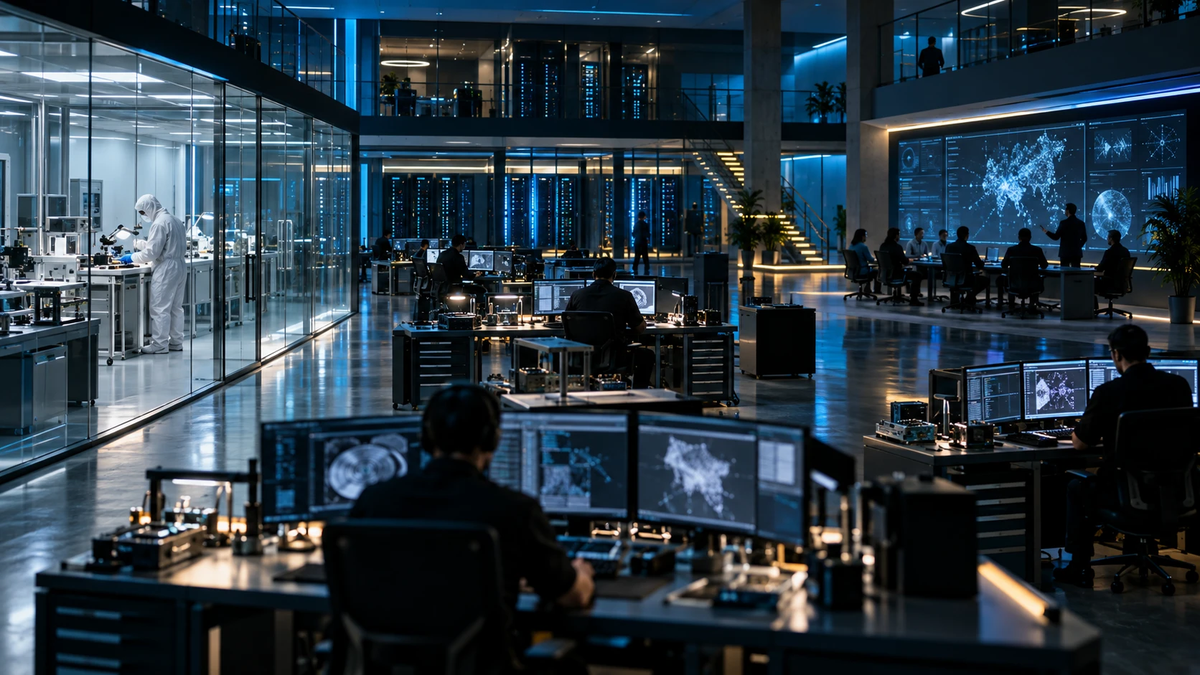
Unlike a standard digital forensic lab built for current case volume, a Centre of Excellence needs forensic technology infrastructure designed to scale. This includes modular lab spaces, cleanroom facilities for damaged media recovery, secure evidence storage built for growing case archives, and network architecture that can accommodate future expansion.
3. Build Multi-Domain Technical Capability
A true Centre of Excellence typically covers multiple forensic domains together, computer and server forensics, mobile device examination, cloud and network forensics, financial and cryptocurrency tracing, and increasingly, AI-assisted evidence analysis. Technology selection should map directly to these domains rather than a one-size-fits-all toolkit.
4. Establish Research and Validation Functions
Part of what distinguishes a Centre of Excellence is its role in evaluating new forensic tools and techniques before they are rolled out more broadly. This requires dedicated space, time and expertise set aside specifically for testing and validation work, separate from live casework.
5. Create a Structured Training Pipeline
A Centre of Excellence often trains investigators from other units, labs or even other states. This requires structured curricula, hands-on lab access for trainees, and experienced trainers who can translate advanced forensic methodology into practical, transferable skills.
6. Implement Governance and Quality Standards
Given its role as a reference point for other units, a Centre of Excellence needs documented standard operating procedures, quality assurance protocols and audit mechanisms that can be shared and replicated across the wider agency network.
Common Challenges in Centre of Excellence Projects
- Scope creep, where the mandate expands mid-project without corresponding infrastructure or budget adjustments
- Underestimating training infrastructure, since a Centre of Excellence needs dedicated space and resources for teaching, not just casework
- Technology fragmentation, when tools are added over time without a coherent multi-domain strategy
- Governance gaps, particularly when procedures are not documented in a way that can be transferred to other units
- Long-term funding and upgrade planning, since a Centre of Excellence is expected to remain current for years, not just at launch
Why Delivery Partner Experience Matters
Building a Centre of Excellence requires a partner who understands large-scale infrastructure delivery as much as forensic methodology itself. Pelorus delivered a forensic Centre of Excellence for DFSL Pune, featuring advanced cleanroom facilities and completed within an accelerated 90-day execution cycle to support complex forensic investigations. This kind of project reflects the scale and precision required for a genuine forensic centre of excellence, rather than a standard lab expansion.
Agencies planning a forensic Centre of Excellence setup in India can draw on Pelorus’s experience across digital forensics infrastructure design and combine it with ongoing investigation services to ensure the centre remains technically current and operationally effective well beyond its initial launch.
Frequently Asked Questions
What is the difference between a digital forensic lab and a Centre of Excellence?
A standard lab focuses on processing incoming cases efficiently, while a Centre of Excellence adds research, training and technology validation functions on top of case handling, often serving as a reference point for other units.
How long does it take to build a forensic Centre of Excellence?
Timelines depend on scope and existing infrastructure, but focused projects with clear mandates have been completed in as little as 90 days, while larger, multi-domain centres typically take longer.
Does a Centre of Excellence need to cover every forensic domain?
Not necessarily. Some centres focus on specific domains such as cybercrime or financial forensics, while others are designed to cover multiple domains under one facility depending on regional case patterns.
Who typically uses a forensic Centre of Excellence?
These centres often serve the agency that built them, along with investigators and forensic staff from other units, labs or states who receive training or send complex cases for examination.
What kind of forensic technology infrastructure is required?
This typically includes multi-domain forensic hardware and software, scalable network and storage architecture, cleanroom facilities for damaged media, and dedicated space for training and technology validation work.
How do I choose the right partner to build a Centre of Excellence?
Look for a provider with proven large-scale infrastructure delivery experience, multi-domain forensic expertise, a track record with government or law enforcement agencies, and strong post-deployment training and support capabilities.
Conclusion
A forensic Centre of Excellence represents a long-term investment in leadership, not just capacity. Built correctly, it becomes a hub that raises forensic standards across an entire region, trains the next generation of investigators and stays ahead of evolving digital threats. Built without a clear framework, it risks becoming an oversized lab that never fulfils its broader mandate.
If your agency is planning a forensic Centre of Excellence setup in India, contact Pelorus to discuss how our infrastructure design and deployment experience can help bring your vision to life.